Showing posts with label employment assessment. Show all posts

Friday, July 22, 2016

EEOC, Systemic Investigations, and Assessments

The Equal Employment Opportunity Commission (EEOC) issued a review of its systemic program titled "Advancing Opportunity" in July 2016. The review marks the 10th anniversary of EEOC's 2006 Systemic Task Force Report

According to a press release accompanying release of the review:
"EEOC has transformed its systemic program in the past decade by investing in staff, training, and technology to build systemic expertise in every EEOC district," reflected EEOC Chair Jenny R. Yang. These investments have produced a 250 percent increase in systemic investigations in the past five years. 
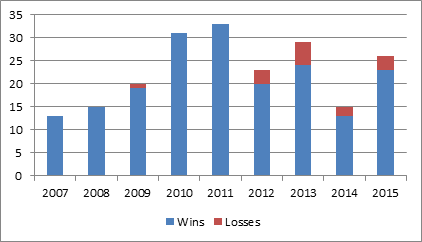
Highlighting EEOC's significant achievements in resolving systemic cases, the review reports a 94% success rate in systemic lawsuits. In addition, EEOC tripled the amount of monetary relief recovered for victims in the past five fiscal years from 2011 through 2015, compared to the monetary relief recovered in the first five years after the Systemic Task Force Report of 2006.  EEOC also tripled the rate of successful voluntary conciliations of systemic investigations from 21% in fiscal year 2007 to 64% in fiscal year 2015.  
EEOC's Success in Systemic Litigation
EEOC's Successes in Systemic Litigation
 Regarding pre-employment assessments, the press release states:
EEOC's systemic investigations have also led to changes in hiring assessment screens that discriminated based on race, sex and disability. In a public conciliation with Target Corporation, EEOC found that four hiring assessments formerly used by the retailer were not job-related and consistent with business necessity as required by Title VII and the ADA. Target agreed to pay $2.8 million to resolve a Commissioner's charge of discrimination alleging the assessments affected thousands of applicants and agreed to ensure that future hiring screens were validated to prevent discrimination against future applicants.
In "EEOC Burnishes Systemic Successes and Intentions," Jackson Lewis, a management side labor and employment law firm, writes:
The EEOC believes that employers too often ignore its pronouncements. Therefore, the EEOC considers the best way to obtain compliance is to leverage its resources by making an example of certain employers through systemic enforcement and lawsuits. 
The EEOC defines systemic discrimination as pattern or practice, policy, or class cases where the discrimination has a broad impact on an industry, profession, company, or geographic location. 
According to the Jackson Lewis article, "The [EEOC review] provides clues to the agency’s intentions in aspirational statements and disclosures about the EEOC’s investments and nationwide teams." These include:
Tests. Like the EEOC’s challenges to background checks, the EEOC’s concern with tests and assessments is that these selection criteria have an unlawful disparate impact. The [EEOC review] lists only one recent success challenging an employer’s use of a test as a selection device. However, it makes several references to the EEOC’s interest in scrutinizing tests and assessments.
While the EEOC review only lists the public conciliation with Target Corporation noted above, as noted in a September 2014 cover story in the Wall Street Journal, there are at least two ongoing systemic investigations relating to the use of pre-employment assessments and claims under the Americans with Disabilities Act that the assessments unlawfully screen out persons with mental disabilities and that the assessments are illegal pre-employment medical examinations.
Cases By Statute

The EEOC review states:
Moving forward, EEOC will focus on three key areas in order to expand the agency's impact and better serve the public: 1) executing national strategies to address persistent and emerging systemic issues; 2) advancing solutions that promote lasting opportunity in the workplace; and 3) strengthening the agency's technology and infrastructure.
Persistent and emerging systemic issues include those listed as national priorities in the EEOC's Strategic Enforcement Plan (SEP). First on the list of national priorities in the SEP  is:
Eliminating Barriers in Recruitment and Hiring. The EEOC will target class-based intentional recruitment and hiring discrimination and facially neutral recruitment and hiring practices that adversely impact particular groups. Racial, ethnic, and religious groups, older workers, women, and people with disabilities continue to confront discriminatory policies and practices at the recruitment and hiring stages. These include exclusionary policies and practices, the channeling/steering of individuals into specific jobs due to their status in a particular group, restrictive application processes, and the use of screening tools (e.g., pre-employment tests, background checks, date-of-birth inquiries). Because of the EEOC's access to data, documents and potential evidence of discrimination in recruitment and hiring, the EEOC is better situated to address these issues than individuals or private attorneys, who have difficulties obtaining such information.
(Emphasis added) 

Friday, June 13, 2014

Exacerbating Long-Term Unemployment: Big Data and Employment Assessments

A recent Brookings Institution paper states that the “diverse and varied set of characteristics [of the long-term unemployed] implies that a broad array of policies will be needed to substantially lower the long-term unemployment rate and stem labor force withdrawal, as concentrating on any single occupation, industry, demographic group or region is unlikely to have a substantial impact reducing long-term unemployment by itself." Please see On the Margins of the Labor Market.

There is, however, a common employment factor that can be linked to numerous occupations, industries, demographic groups and regions -- online job application processes that require individuals (i) to provide "location-based information" (i.e., distance from job site, commute time, household relocation) and (ii) to complete personality assessments.The screening elements in these processes exclude or penalize persons with lower socioeconomic status - disproportionately Blacks, Hispanics, persons with mental illness, and the less well-educated. The same groups (ex persons with mental illness) that the recent Brookings Institution paper found to comprise a disproportionate percentage of the long-term unemployed.

Jobs that were once filled on the basis of work history and interviews are left to personality tests, data analysis and algorithms. The new hiring tools are part of a broader effort to gather and analyze employee data.  Use of online assessments has grown exponentially over the past 10-15 years, with assessment companies like Kronos now having a database of hundreds of millions of job applicant and employee information. To provide a sense of scale, one major big box retailer processes more than nine million job applications a year.

Personality tests are “growing like wildfire,” said Josh Bersin, president and CEO of Bersin & Associates, an Oakland, Calif., research firm. Bersin estimated that this kind of pre-hire testing has been growing by as much as 20 percent annually in the past few years. Industries that are flooded with resumes such as retail, food service and hospitality are among the ones that use such tests most often, he said.

Employment Redlining: Location-Based Discrimination

Kenexa, an assessment company purchased by IBM in December 2012 for $1.3 billion, will test tens of millions of applicants this year for thousands of clients. Kenexa believes that a lengthy commute raises the risk of attrition in call-center and fast-food jobs. It asks applicants for call-center and fast-food jobs to describe their commute by picking options ranging from "less than 10 minutes" to "more than 45 minutes."The longer the commute, the lower their recommendation score for these jobs, said Jeff Weekley,, who oversees the assessments. Applicants also can be asked how long they have been at their current address and how many times they have moved. People who move more frequently "have a higher likelihood of leaving," Mr. Weekley said.

Painting with the broad brush of distance from job site, commute time and moving frequency results in otherwise well-qualified applicants being excluded, applicants who might have ended up being among the longest tenured of employees. The Kenexa  findings are generalized correlations; the insights say nothing about any particular applicant. Please see From What Distance is Discrimination Acceptable.


Are there any groups of people who might live farther from the work site and may move more frequently than others? Yes, lower-income persons, disproportionately women, black, Hispanic and the mentally ill. They can't afford to live where the jobs are and move more frequently because of an inability to afford housing or the loss of employment.

Spatial  Mismatch and its Institutionalization

An NBER study published in April 2014, "Job Displacement and the Duration of Joblessness: The Role of Spatial Mismatch, finds that better job accessibility significantly decreases the duration of joblessness among lower-paid displaced workers. Blacks, females, and older workers are more sensitive to job accessibility than other subpopulations.

The so-called “spatial mismatch hypothesis,” which originally grew out of research on the effects of segregated housing markets, has been debated among economists and social scientists since the 1960s. But while there’s general agreement that “job accessibility” has some impact on unemployment duration, researchers have disagreed about how important it is and for which groups of workers.

Although the study was limited to the 2000-05 period, its conclusion — that “a worker with locally inferior access to jobs is likely to have worse labor market outcomes” — could help explain the current situation. What we know for sure is that as of March 2014, more than a third (35.7%) of all unemployed Americans had been out of work for more than 26 weeks, according to the BLS. Blacks and Asians are most likely to experience extended joblessness: Last month, 44% of unemployed blacks and about as many unemployed Asians had been out of work longer than 26 weeks, versus a third of unemployed whites and 32% of unemployed Hispanics. Please see Long-Term Unemployment and its Costs.

With the "location-based" scoring "insights" provided by companies like Kenexa, spatial mismatch has been institutionalized over the past 5-10 years. If a job applicant has a long commute - whether due to the lack of effective mass transit where the applicant lives or to the lack of access to personal transportation, that applicant may never be interviewed, let alone offered a job.

Mental Illness and Socioeconomic Status

One of the most consistently replicated findings in the social sciences has been the negative relationship of socioeconomic status (SES) with mental illness: The lower the SES of an individual is, the higher is his or her risk of mental illness.

As an example, for the period from 2005-2010, the Centers for Disease Control found that among adults 20–44 and 45–64 years of age, depression was five times as high for those below poverty, about three times as high for those with family income at 100%–199% of poverty, and 60% higher for those with income at 200%–399% of poverty compared with those at 400% or more of the poverty level.

According to a 2001 study, lower income Americans had a higher prevalence of 1 or more psychiatric disorders (51% vs 28%): mood disorders (33% vs 16%), anxiety disorders (36% vs 11%), and eating disorders (10% vs 7%). Consequently, pre-employment assessments using these location-based "insights" screen out persons with mental illness.

Mental Illness and Disability

The prevalence of mental disorders in the U.S. population remained unchanged between 1990 and 2003.  In that same interval, the rate of treatment of mental illness substantially increased—which in turn should have contributed to improved work-readiness among individuals coping with mental illness. The combination of the prevalence of mental disorders remaining unchanged and substantially increased rates of treatment should have resulted in a decline in the percentage of persons receiving SSDI awards who are diagnosed with mental illness. That has not been the case. Please see Costing Taxpayers Billions of Dollars Each Year.

People with psychiatric impairments constitute the largest and most rapidly growing subgroup of Social Security disability beneficiaries. In 2011, 47.5 percent of persons receiving SSI and 31.0 percent of persons receiving SSDI had a mental disorder. These percentages keep growing, in part because beneficiaries with psychiatric impairments are generally younger than other beneficiaries when they become ill and therefore remain on the Social Security rolls much longer.

Some analysts contend that rising disability awards for mental illness reflect a “broken” system that provides benefits to those who should not receive them; others point out that income support makes it easier for persons with mental illness to live in the community. These conflicting conclusions reflect an ongoing debate over whether increasing awards for mental illness represent a policy success because they reach needy individuals or failure because the increased awards reflect moral hazard.

The income support programs may be working as designed, but those programs did not anticipate the impact of the widespread use of pre-employment assessments and the resulting material increase in the absolute number and percentage of unemployed persons with mental disabilities seeking SSDI and SSI benefits as a consequence of the use of potentially  illegal assessments.

* * * * *

Persistently high long-term unemployment has significant implications for families, government budgets, and the country’s overall economic and social health. The high rate of long-term unemployment has had a direct impact on the federal budget by prompting the extension of normal unemployment benefits, ratcheting up spending on other government safety-net programs (including, indirectly, SSDI, SSI and Medicare) and by reducing taxable wages. Martin Feldstein in a recent article in the Wall Street Journal, draws on the Brookings Institution paper to suggest that those who have been out of work for six months or more do not affect wage inflation and that since the unemployment rate among those out of work for less than six months was only 4.1%, wage inflation may soon begin to rise more rapidly.

The growing and widespread use of employment assessments and applicant data collection processes over the past ten years has likely had an impact on the growth of the long-term unemployed in the U.S. labor market.  Persons with lower socioeconomic status, disproportionately Black, Hispanic, persons with mental illness, and the less well-educated, risk becoming a permanent underclass of the unemployed and underemployed.

Some of the most profound challenges revealed by the recent White House Report "Big Data: Seizing Opportunities, Preserving Values" concern how big data analytics may lead to disparate inequitable treatment, particularly of disadvantaged groups, or create such an opaque decision-making environment that individual autonomy is lost in an impenetrable set of algorithms. Please see White House: Big Data's Role in Employment Discrimination.


Workforce assessment systems, designed in part to mitigate risks for employers, have become sources of material risk, both to job applicants and employers. The systems create the perception of stability through probabilistic reasoning and the experience of accuracy, reliability, and comprehensiveness through automation and presentation. But in so doing, technology systems draw  attention away from uncertainty and partiality. Moreover, they shroud opacity—and the challenges for oversight that opacity presents—in the guise of legitimacy, providing the allure of shortcuts and safe harbors for actors both challenged by resource constraints and desperate for acceptable means to demonstrate compliance with legal mandates and market expectations.

Monday, January 27, 2014

What Do Car Platforms and Employment Assessments Have In Common? Systemic Risk

A major manufacturing trend in the automotive industry has been the focus on global platform-based vehicle design and manufacturing. One of the trade publications predicts that by 2017 VW will build over 40 models on its MQB platform (Audi A3, VW Golf, etc.) totaling over 4 million vehicles worldwide. All of the global car makers will be above 2 million vehicles per year with their major platforms.


The savings from faster vehicle development time, lower tooling costs and more advantageous supply contracts (by leveraging higher volumes) could arguably add up to billions of dollars in savings. Suppliers also benefit as they service larger, more stable supply contracts that support broad-based utilization of their global manufacturing facilities.

And the risks? The same global scale that can yield big savings benefits could drive huge costs and reputation damage if a product defect or manufacturing quality issue surfaces. Instead of the defect being confined to a single plant, single model or even a single vehicle segment, the potential exists for the defect to be multiplied across thousands of vehicles around the world in a very short amount of time.


Employers and assessment companies face analogous risks. For many applicants, especially those applying for entry-level positions in retail and food service, employment assessments offer a standardized experience for job applicant. While this "one size fits all" approach helps to reduce an employer's costs and may reduce the impact of overtly biased or discriminatory behavior on the part of one or more recruiters, the inclusion of one or more potentially "defective components" in the assessments means that employers face the risk that a finding of bias or discrimination in one of the assessments will put all tests at risk. Please see When the First Domino Falls: Consequences to Employers of Embracing Workforce Assessment Solutions.

These "defective components" in assessments may be either design defects (i.e., the adoption and use of the five-factor model of personality) or manufacturing defects (i.e., coding errors in the assessment software). The latter is analogous to the coding error at 23andMe that resulted in notices going out to some customers informing them that they had a chronic and life-shortening condition - limb-girdle muscular dystrophy - when they did not. Please see On Not Dying Young: Fatal Illness or Flawed Algorithm?


Saturday, January 11, 2014

By The Numbers: What Employee Engagement and Stock Price Performance Tell Us About Pre-Employment Assessments

The benefits provided by the use of pre-employment assessments, whether called workforce science, talent analytics or any other name, should be readily apparent and quantifiable. For example, has the rising use of pre-employment assessments created greater employee engagement? If pre-employment assessments are designed to find those employees with the best fit for the company culture, shouldn't companies who use those assessments outperform their peer companies who do not use the assessments?

Employee Engagement

Gallup defines “engaged” employees as those who are involved in, enthusiastic about, and committed to their work and contribute to their organization in a positive manner. The information in this section come from Gallup's State of the American Workforce 2013 report.

The report shows that 70% of American workers are “not engaged” or “actively disengaged” and are emotionally disconnected from their workplaces and less likely to be productive. Currently, 52% of workers are not engaged, and worse, another 18% are actively disengaged in their work. Gallup estimates that these actively disengaged employees cost the U.S. between $450 billion to $550 billion each year in lost productivity.

Having the vast majority of American employees not engaged with their workplaces is troublesome as the country attempts to recover ground lost during the financial crisis and get back on track to pre-recession levels of prosperity. Even more troubling is that workplace engagement levels have hardly budged since Gallup began measuring them in 2000, with fewer than one-third of Americans engaged in their jobs in any given year. 

So, notwithstanding the exponential growth in pre-employment assessments over the past 10-15 years, "workplace engagement levels have hardly budged" since 2000. Contrast the lack of growth in employee engagement with the marketing of pre-employment assessments, like this selection from the Kronos website:
Your employees are the face of your brand and the most vital asset of your business. They drive your productivity and profitability. What’s more important than selecting the right ones? Take the guesswork out of employee selection with industry-specific, behavioral-based assessments and interview guides [from Kronos].
Gallup’s research shows that employee engagement is strongly connected to business outcomes essential to an organization’s financial success, including productivity, profitability, and customer satisfaction. And engaged employees are the ones who are the most likely to drive the innovation, growth, and revenue that their companies desperately need. Yet, the purported benefits of pre-employment assessments have failed to move the needle on employee engagement, meaning companies have not received the promised productivity and profitability "bumps" from using pre-employment assessments.

Stock Price Performance

The chart below compares stock price performance of CVS Caremark (CVS) and Walgreens Co.(WAG) for the period from July 31, 2011 to January 11, 2014.

The reason for selecting the July 31, 2011 start date is that in July 2011, CVS and the Rhode Island Civil Liberties Union (ACLU) entered into a voluntary settlement addressing the ACLU’s complaint challenging CVS’s use of a pre-hire questionnaire that the ACLU claimed could have a discriminatory impact on people with certain mental impairments or disorders.

The settlement came after the Rhode Island Commission for Human Rights had issued a finding in February 2011 that there was "probable cause" to believe that the questionnaire used by CVS violated state anti-discrimination laws that bar employers from eliciting information that pertain to job applicants' mental or physical disabilities.Pursuant to the settlement agreement, CVS agreed to permanently remove the questions at issue from its online application. Since that time, CVS has not utlized online pre-employment assessments as part of its hiring process.

The reasons for comparing CVS stock price performance with Walgreens are (i) that Walgreens and CVS are direct competitors and (ii) Walgreens continues to use online pre-employment assessments, including personality tests similar to those CVS was using prior to the Rhode Island settlement agreement. CVS stock price performance is shown by the black line and Walgreens stock price performance is shown by the brown line.

The numbers don't lie, do they? Since eliminating the use of pre-employment assessments, CVS stock price performance has increased by approximately 90%. Walgreens, in contrast, continues to use pre-employment assessments and its stock price performance has increased by approximately 50%. As an investor, where would you have rather put your money? As a person with a mental illness or their family member, loved one, friend and colleague, where would you have rather shopped, at a company that engages in hiring discrimination against persons with mental illness or at one that does not (CVS)?

Saturday, July 20, 2013

What Are the Issues?


When people apply for a job online these days, they are increasingly being asked to take personality tests even before they exchange an e-mail or have a phone interview with a hiring manager. Such tests are being used by companies as a way to prune the job applications they receive.

The problem is that these assessments may also be used to illegally screen out job seekers with mental disabilities. 

As a result, too many people living with mental disabilities that are willing and able to work remain unemployed or underemployed. Not only does the United States economy experience the indirect loss in productivity and tax revenue arising from the unemployment and underemployment of persons with mental disabilities, there is a direct, rising and material cost to the U.S. Treasury associated with income support payments, like Social Security Disability Insurance and Supplementary Support Income. (Please see the post Costing Taxpayers Billions of Dollars Each Year).

Who are these persons with mental disabilities?

They are our sons and daughters, our mothers and fathers, our friends and colleagues. Mental illness is no respecter of age, race, gender, faith, sexual orientation, occupation, social position, education or wealth. Anyone can develop a mental illness.

They are:
  • A soldier returning from Afghanistan looking to enter the civilian workforce, who suffers from PTSD as a result of combat
  • A mother of a young child looking to support her family, who is recovering from post-partum depression
  • A recent college graduate looking to start his career, who has been diagnosed with bipolar disorder
They are us. An estimated 26.2% of Americans ages 18 and older - about one in four adults - suffer from a diagnosable mental disorder in a given year.

At some point during his or her lifetime, the average American adult has a 28.8% chance of developing an anxiety disorders, a 24.8% chance of developing an impulse-control order, and a 20.8% chance of developing a mood disorder.

How widespread is pre-employment testing?


There are hundreds of companies that offer pre-employment assessments and/or implementation services to employers. One of the larger assessment companies, Kenexa (recently acquired by IBM) assesses more than 20 million persons a year. Other large assessment companies include Kronos (through its acquisition of Unicru), Oracle (through its acquisition of Taleo), SAP (through its acquisition of Success Factors) and SHL.

A mid-sized company in the retail business may have 50,000 assessments per month or 600,000 per year. Large “big box” employers and fast food companies may have 1-2 million assessments per year. 

Personality tests are “growing like wildfire,” said Josh Bersin, president and CEO of Bersin & Associates, an Oakland, Calif., research firm. Bersin estimated that this kind of pre-hire testing has been growing by as much as 20 percent annually in the past few years. Industries that are flooded with resumes such as retail, food service and hospitality are among the ones that use such tests most often, he said.

“A lot of work has been done over the years on how personality tests impact gender, race or age bias, but I don’t know if anyone has done enough research yet on mental disabilities,” says Bersin, “the medical community is starting to redefine what these diagnoses are, and the laws may not have caught up.”

Are pre-employment assessments legal?

The policy of the Equal Employment Opportunity Commission (EEOC) is that pre-employment testing, including personality testing, is acceptable as long as the test is not a "medical examination" as defined by the Americans with Disabilities Act (ADA).

EEOC guidance provides a seven-factor test for analyzing whether a test or procedure qualifies as a “medical examination,” including whether the test is designed to reveal an impairment of physical or mental health such as those listed in the Diagnostic and Statistical Manual of Mental Disorders (DSM).

According to the guidance, the presence of any one of the seven factors is enough to support a finding that the test is a medical examination. 

How do the assessments screen out persons with mental disabilities?

A key component of the assessment process is a computer-administered personality test based on the five factor model of personality, or FFM, a coordinate system that maps which personality traits go together in people’s descriptions or ratings of one another. the FFM describes personality in terms of five broad factors:
  • Openness: inventive and curious vs. consistent and cautious. 
  • Conscientiousness: efficient and organized vs. easy-going and careless. 
  • Extraversion: outgoing and energetic vs. solitary and reserved.
  • Agreeableness: friendly and compassionate vs. cold and unkind
  • Neuroticism: sensitive and nervous vs. secure and confident
The majority of personality disorders are characterized by significant positive relations with Neuroticism and significant negative relations with Extraversion, Agreeableness and Conscientiousness. Consequently, applicants who take the Assessment and have low scores on Openness, Conscientiousness, Extraversion and Agreeableness and high scores on Neuroticism are likely not to be offered employment (or even interviewed).

Based on an applicant’s responses to the online test, the assessment categorizes the applicant as red, green or yellow. In many cases, green gets an applicant an automatic follow-up interview. Red is usually an automatic discard.  A red or yellow score on the Assessment does not necessarily mean that an applicant has a mental disability, but a person who has a mental disability is likely to receive a red or yellow score on the assessment and will be denied consideration for employment.

Some have argued that assessments are designed to measure “normal” personalities and/or “stable” personality traits. That argument fails because, as a dimensional model, the FFM determines each applicant’s position along the axis of each of the five traits. Those five traits are the common measuring rod for all persons, including persons with mental disabilities. By its design and structure, an assessment based on the FFM measures all aspects of a personality, including both normal and abnormal personality traits.

For more information, please see the ADA, FFM and DSM post.

Are the tests designed to intentionally screen out persons with mental disabilities?

Perhaps.

One assessment company, Clearfit, lists “27.2 days/yr. lost productivity for depressed workers” as one of the impacts to employers if personality is not taken into account in the hiring process.

In any event, courts have held that the intent is irrelevant. What is relevant is that the use of the FFM as the basis of an assessment means that the assessment was designed to reveal mental impairments by identifying and rejecting those applicants who do not fall within the “green” parameters of the five traits. 

Are there any studies addressing the impact of assessment tests on persons with mental disabilities?

There has been no public disclosure of any studies addressing the impact of FFM-based assessments on persons with mental disabilities. One prominent assessment company, Kronos, has claimed in a court document, that there is “no known method … to ascertain adverse impact against the entire generic category of disabilities.” Kronos goes on to claim ”that “the diverse nature of disabilities (e.g., blindness, paraplegia, deafness, severe mental illness) makes an analysis of a selection device’s adverse impact on “people who have disabilities” impossible.” Such claims are unsupportable.

image
As stated in a 2004 article published by the the Journal of Rehabilitation Administration, “studies of sub-groups, such as individuals with mental illnesses or cognitive impairments could be conducted to determine the potential, and perhaps likelihood for, pre-employment test results unfairly penalizing these individuals in the employee selection and hiring stages …” 

Such studies are, in fact, mandated. In a 1975 decision, the Supreme Court addressed a case in which an employer implemented a test on the theory that a certain verbal intelligence was called for by the increasing sophistication of the plant’s operations. The Court held that a test should be validated on people as similar as possible to those to whom it will be administered. The Court further stated that differential studies should be conducted on minority groups wherever feasible.

ADA, FFM and DSM


ADA and Restrictions on Medical Examinations

When Congress enacted the ADA in 1990, it found that people with disabilities have been “subjected to a history of purposeful unequal treatment” in many areas including employment.   

The ADA strictly prohibits certain inquiries and examinations.  Title I of the ADA bars employers from questioning about the existence, nature or severity of a disability and prohibits medical examinations until after a conditional offer of employment has been made. Courts have held that medical examinations include psychological tests. 

EEOC Enforcement Guidance

EEOC enforcement guidance provides a seven-factor test for analyzing whether a test or procedure qualifies as a “medical examination,” including:
  • whether the test is designed to reveal an impairment of physical or mental health such as those listed in the Diagnostic and Statistical Manual of Mental Disorders (“DSM”); and
  •  whether the test is interpreted by a health care professional.
According to the guidance, the presence of any one of the seven factors is enough to support a finding that the test is a medical examination.

The Assessment and the Five-Factor Model

A key component of the Assessment process is a computer-administered personality test based on the five factor model (FFM), a coordinate system that maps which personality traits go together in people's descriptions or ratings of one another. The FFM is empirically-based, and its five factors were discovered through a statistical procedure called factor analysis.
image

As illustrated in the diagram to the right, the FFM describes personality in terms of five broad factors:
  • Openness: inventive and curious vs. consistent and cautious. 
  • Conscientiousness: efficient and organized vs. easy-going and careless.
  • Extraversion: outgoing and energetic vs. solitary and reserved.
  • Agreeablenessfriendly and compassionate vs. cold and unkind
  • Neuroticism:sensitive and nervous vs. secure and confident
Dimensional vs. Categorical Taxonomy

The FFM is a "dimensional" taxonomy consisting of a profile of a diagnosis in terms of a few relevant and empirically-validated traits (e.g., the five factors).  The model is based on the idea that a mental disorder itself is not a categorical construct but rather a unique and meaningful constellation of traits.

image
As illustrated in the table at left, each of the five factors is viewed on a dimensional basis, with personality determined by positioning along each of the five axes of Openness, Conscientiousness, Extraversion, Agreeableness and Neuroticism.

Previous versions of the DSM, like the DSM-IV-TR, were based on the "categorical" model. The categorical model is based on a model of diagnosis in which a patient’s symptoms add up to a diagnosis which subsequently leads to a treatment that addresses the disorder. Research and practice have found that psychological disorders do not lend themselves well to the categorical model due to their eclectic and variable nature.

FFM and DSM

The shortcomings of the categorical model led the APA to adopt the FFM in the DSM-5 for purposes of diagnosing personality disorders. The adoption of the FFM in the DSM-5 follows approximately two decades of research demonstrating that the FFM can be used as a structural model for describing and understanding personality disorders, including those within the DSM.

In her seminal review of the personality disorder literature published in 2007, Dr. Lee Anna Clark, one of eleven members of the working group on personality disorders for DSM-5, stated that “the five-factor model of personality is widely accepted as representing the higher-order structure of both normal and abnormal personality traits.”  

A study entitled, "The Convergent Structure of DSM-5 Personality Trait Facets and Five-Factor Model Trait Domains," published in September 2012 and co-authored by another member of the DSM-5 personality disorder working group, states:
  • "[T]his study builds on a growing body of research indicating correspondence between the DSM-5 personality trait model and the FFM [citations omitted] by showing that common higher-order dimensions can be identified in a conjoint analysis of FFM and DSM-5 traits."
  • "[T]he structure of maladaptive traits proposed for DSM-5 bears clear resemblance to the structure of normal personality as represented by the [FFM]."
  • "The … FFM is capable of linking normal personality traits with disordered personality features."
A December 2012 article entitled “The Five-Factor Model of Personality Disorder and DSM-5” states that “studies have consistently demonstrated significant relations between the traits included in the FFM and the DSM [personality disorder] constructs. The article also sets out the following table showing the correlation between FFM domain factors and DSM-5 traits:

image


The Assessment is Designed to Reveal An Impairment

As noted, EEOC  guidance provides that tests or assessments are medical examinations if they provide evidence that would lead to identifying a mental disorder or impairment, such as those listed in the DSM.

The majority of personality disorders, including those listed in the DSM, are characterized by significant positive relations with Neuroticism and significant negative relations with Extraversion, Agreeableness and Conscientiousness. Consequently, applicants who take the Assessment and have low scores on Openness, Conscientiousness, Extraversion and Agreeableness and high scores on Neuroticism, will be categorized as red.

image
The chart at left  illustrates the application of the FFM dimensional-based process used by the Assessment.  Based on an applicant’s responses to the online test, the Assessment categorizes the applicant as red, green or yellow. In many cases, green gets an applicant an automatic follow-up interview. Red is usually an automatic discard. 

Employers and assessment providers have tried to argue that their assessments are designed to measure “normal” personalities and/or “stable” personality traits. That argument fails because, as a dimensional model, the FFM determines each applicant’s position along the axis of each of the five traits. Those five traits are the common measuring rod for all persons, including persons with mental disabilities. By its design and structure, an Assessment based on the FFM cannot measure only so-called “normal” personalities.

While the intent of the Assessment design may not have been to reveal a mental impairment, courts have held that the intent is irrelevant. What is relevant is that the use of the FFM as the basis of the Assessment means that the Assessment was designed to reveal mental impairments by identifying and rejecting those applicants who do not fall within the “green” parameters of the five traits.

Risks to Employers - Damages, Reputational Harm and Federal Lawsuits

What are the potential risks to the employers and the testing companies?

Potential risks include:

Scale/scope of potential damages

a) Tens of millions of assessments administered each year – some companies have several million applicants per year
b) If the pre-assessment tests are determined to be a medical examination, then every applicant has a claim – not just those with a mental disability
c) If the pre-assessment tests are determined not to be a medical examination, but the assessments are discriminatory, there are still millions of potential claims (according to the Census Bureau, approximately 16.5% of working age population has a disability)
d) Costs of defense and the potential of having to pay legal fees and costs of plaintiff’s lawyers

Reputational damage/lost sales (revenue)

a) Companies with discriminatory tests compete against companies who do not use tests
  • Some of the companies receive substantial revenue from persons, and families of persons, with mental illness (e.g., pharmacy companies and their dispensing of prescription drugs)
  • Customers have choices – the ability to shop elsewhere – which can result in lost sales/revenue to companies utilizing illegal pre-employment assessments
image

b) Business partners, employees and shareholders may be affected by association with company that discriminates

Privacy/Medical Information Claims

a) If the pre-assessment tests are determined to be medical examinations, the information collected by the tests would be considered confidential medical information, subject to a variety of statutory and regulatory safeguards.
b) The failure by the companies to treat the assessment responses as confidential medical information creates another line of damage claims against those companies.
c) The number of claims for violations of medical information safeguards is exponentially greater than the number of claims for unlawful medical examinations. The statute of limitations on claims for violations of medical information safeguards is longer than that for unlawful medical examinations. In addition, the potential claimants include employees, past employees and applicants not hired.

Are companies aware of these risks?

Yes. The Americans with Disabilities Act (ADA), with its restriction on pre-employment offer medical examinations, was enacted in 1990. Since the ADA’s enactment there have been a number of courts that have been asked to rule on whether an assessment is an illegal medical examination.
The risk is also known to the testing companies. Kenexa, for example, which was recently acquired by IBM, included the following disclosure in the “Risk Factors” section of its annual report (10-K):
The failure of our solutions to comply with employment laws may require us to indemnify our customers, which may harm our business. Some of our customer contracts contain indemnification provisions that require us to indemnify our customers against claims of non-compliance with employment laws related to hiring. To the extent these claims are successful and exceed our insurance coverages, these obligations would have a negative impact on our cash flow, results of operation and financial condition.
Further, the Equal Employment Opportunity Commission (EEOC) has been litigating with Kroger and Kronos for the past five years over the pre-employment assessment used by Kroger and provided and administered by Kronos, and the EEOC has included pre-employment assessments in its top national priority for its Strategic Enforcement Plan (2012-2016).

Are companies aware of the legal requirements relating to testing and assessment?

Rocket-Hire, a consultancy that provides expert advice and solutions in all areas related to pre-employment screening, testing, and assessment, states in its Assessment Usage Survey for 2009:
  • Our survey results seem to indicate that legal issues are not a primary concern for all organizations using assessment and that many organizations do not have a deep internal knowledge of legal issues related to assessment. …
  • Legal action against organizations in relation to assessment usage seems low. … One wonders if increased EEOC investigations and regulations will lead to an increase in this area.
  • The fact that knowledge levels related to legal issues seems to be low may indicate that lack of concern is caused by lack of knowledge or understanding of what should be done to ensure compliance.
  • We hope that the future brings more concern from users around fully understanding legal issues for the proper use of assessment tools and that this concern helps to ensure the adoption of proper compliance strategies.
image
The risk/reward calculus for companies that fail to invest the necessary time and resources to meet their legal obligations is discussed in the Rocket-Hire “Hot, Warm and Cold Trends in Pre-Employment Assessment for 2012,” which states:

At the end of the day, the threat of investigation by the Feds is pretty low given the resources they have available, so most companies continue to play the odds rather than invest the time and money in ensuring compliance.
Sadly, I do not predict that there will be any changes to this in the coming year. It troubles me that there is silence around how the new sophisticated data modeling tools and matching products meet government standards.